Railway Structures
Reinforced Concrete
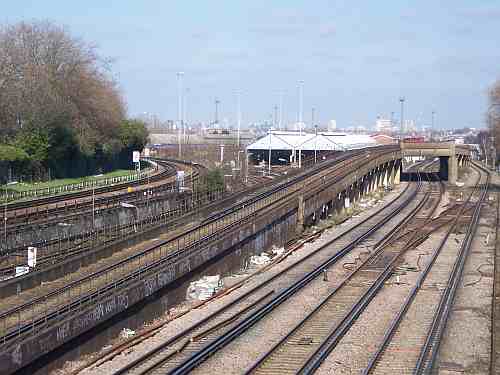
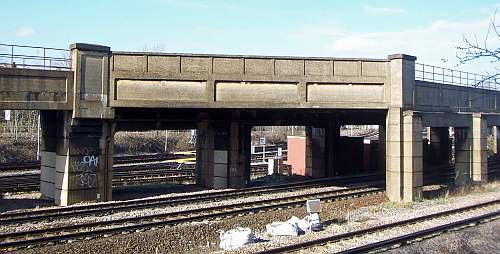
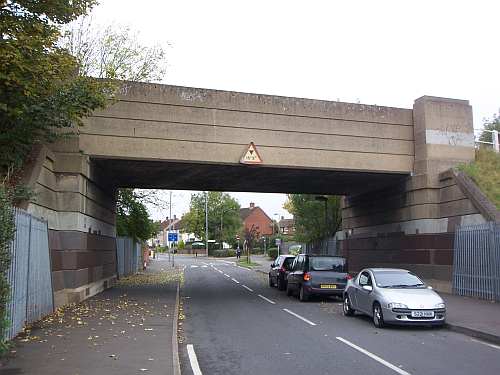
Wimbledon flyover, completed in 1936, is also of reinforced concrete, but with steel beams incorporated into the deck. Substantial use was made of concrete for construction of the Chessington branch, completed in 1939, including for under bridges, but all is not as it might seem. Reinforced concrete would not have been strong enough for the spans and loadings required. All of the bridges carrying the railway over roads are steel plate-girder structures encased in concrete, carried on mass concrete abutments. It was thought, incorrectly, that this would minimise future maintenance costs, not least because the bridges would not need to be painted.
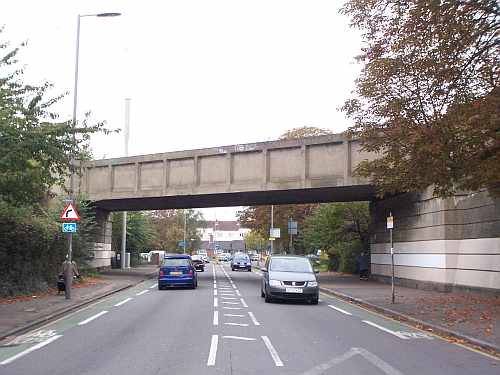
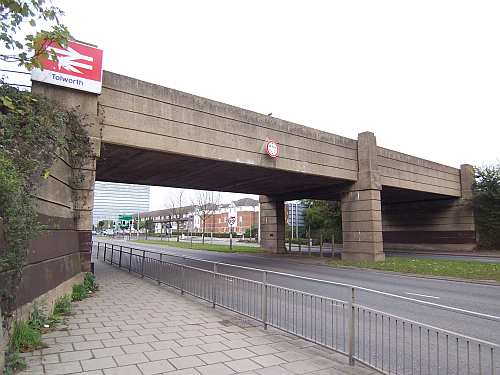
Malden Road bridge has a skewed span and the parapet repeats, on a larger scale, the panelled design of earlier Southern concrete bridges. However, most bridges on the branch have the same general appearance as Moor Lane bridge.
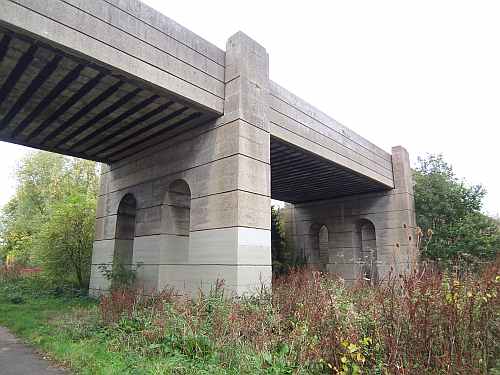
Kingston Road bridge requires a centre pier in order to span the dual carriageway. Only at the viaduct over the Hogsmill River are steel beams exposed to view in the underside of the deck. The viaduct has four spans, the piers being cast in situ reinforced concrete, each with two round-headed relieving arches. The abutments and parapets are similar to those of most of the road bridges.
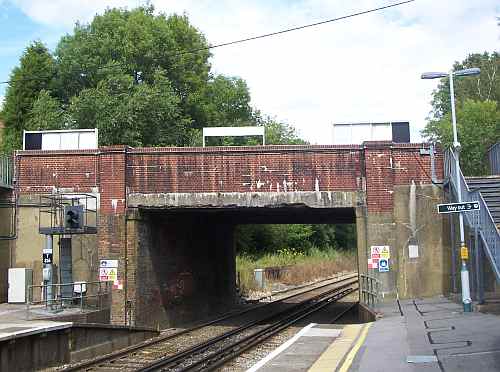
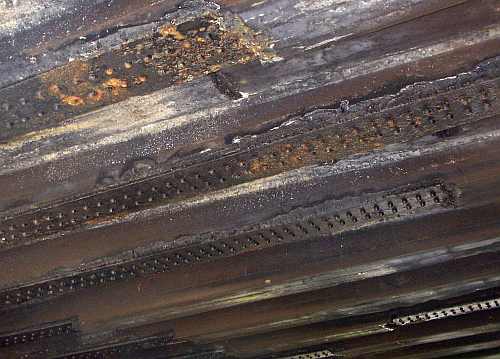
The Southern's love of steel encased in concrete is also demonstrated by Old Horsham Road bridge, Holmwood. Here it can be seen that the steel plate beams have had concrete cast around them, but much has failed and broken away. This has probably been caused by water penetrating through the deck and causing the steel to rust. |
First Reinforced Concrete Last
All photographs are copyright
return to the Railway Structures menu
return to picture gallery page
This page was created 9 January 2010